You’ve been treated unfairly at work. Maybe it was a demotion you didn’t deserve, a hostile supervisor who targeted you, a job offer that disappeared the moment they found out you were pregnant. You know something was wrong. You want to fight back.
So you Google “how to file an EEOC complaint,” find the form, and think: I can do this myself. How hard can it be?
Here’s what nobody tells you — and what employers are counting on you not to know.
The EEOC complaint is not just paperwork. It is the entire foundation of your case.
Under federal law, before you can ever sue your employer for workplace discrimination, you must first file a formal charge with the Equal Employment Opportunity Commission. That charge must be filed within a strict deadline. Typically, it’s 180 or 300 days from the discriminatory act, depending on your state. Miss that window by a single day, and your case is permanently over. No exceptions.
But the deadline is actually the easy part.
What trips up employees who go it alone is the content of the complaint itself. The EEOC charge is a legal document. Every claim you fail to include, every protected category you forget to check, every specific act of discrimination you omit, may be permanently waived. Courts have routinely dismissed discrimination lawsuits because the employee’s EEOC charge didn’t adequately describe the conduct they later tried to litigate. Not because the discrimination didn’t happen. Because it wasn’t described correctly on a government form filed months or years earlier.
That is a permanent mistake. There is no do-over.
Most employees don’t realize they have multiple claims, and employers know it.
A skilled employment attorney will listen to your story and identify every legal theory that applies: race discrimination, sex discrimination, retaliation, hostile work environment, failure to accommodate. Each claim needs to be properly framed and documented in your initial charge. An employer’s legal team will exploit every gap, every ambiguity, every missed claim you leave on that form.
You are not on equal footing when you go it alone. They have lawyers. You need one too.
The good news: getting proper representation is easier than you think.
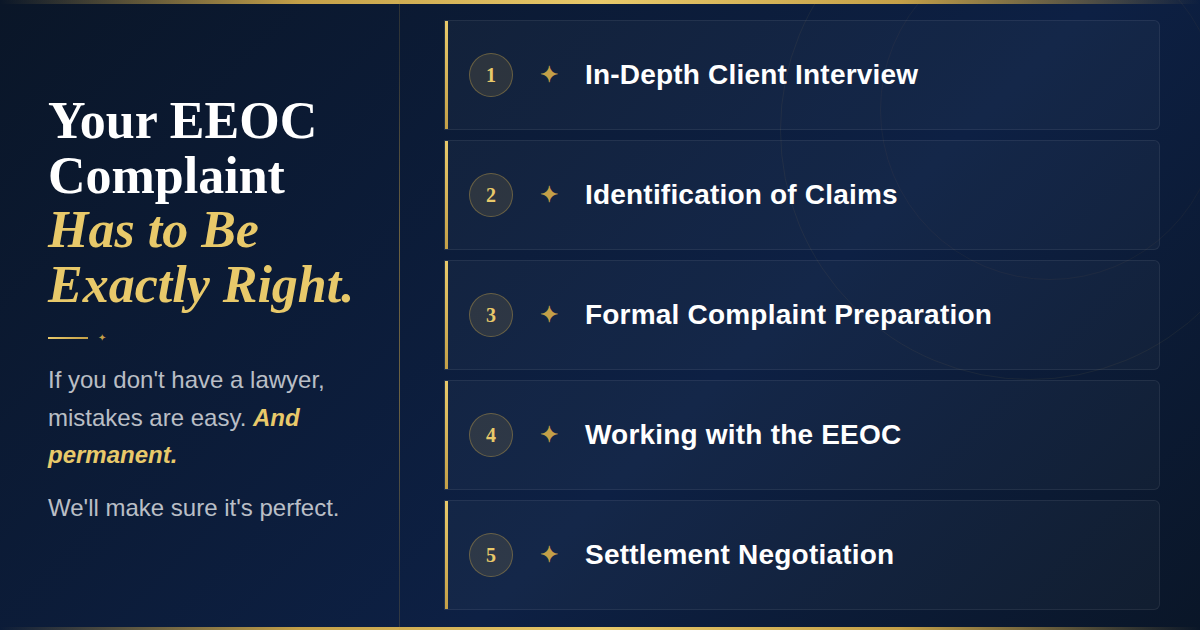
Jim Garrity will interview you in depth, identify every viable claim, draft a precise and comprehensive charge, work directly with EEOC investigators on your behalf, and pursue settlement where possible, all while you focus on your life.
Bottom line: The mistake of going it alone could cost you everything.
If you believe you’ve experienced workplace discrimination, don’t let a filing error decide your fate before you’ve had a fair fight. The law gives you rights, but only if your complaint is exactly right from the very first day.
Your employer has lawyers protecting them. Shouldn’t you?
Categories: 1099 Employees, Accommodations, ADA Retaliation, Appeals, Applications and Resumes, Arrest Record, Background Checks, Bad/Retaliatory Job References
 Jim Garrity, Esq. - Employee Rights Lawyer
Leave a comment